

Herniated & Bulging Disc
Back pain caused by a slipped, bulging, or herniated disc can be intense and limiting—interfering with work, sleep, and daily activity. If you’re looking for a natural, effective solution, chiropractic care offers a non-invasive approach to relieve pain and restore spinal health. At Spring Spine Center, we help patients find relief through targeted, personalized treatment plans.
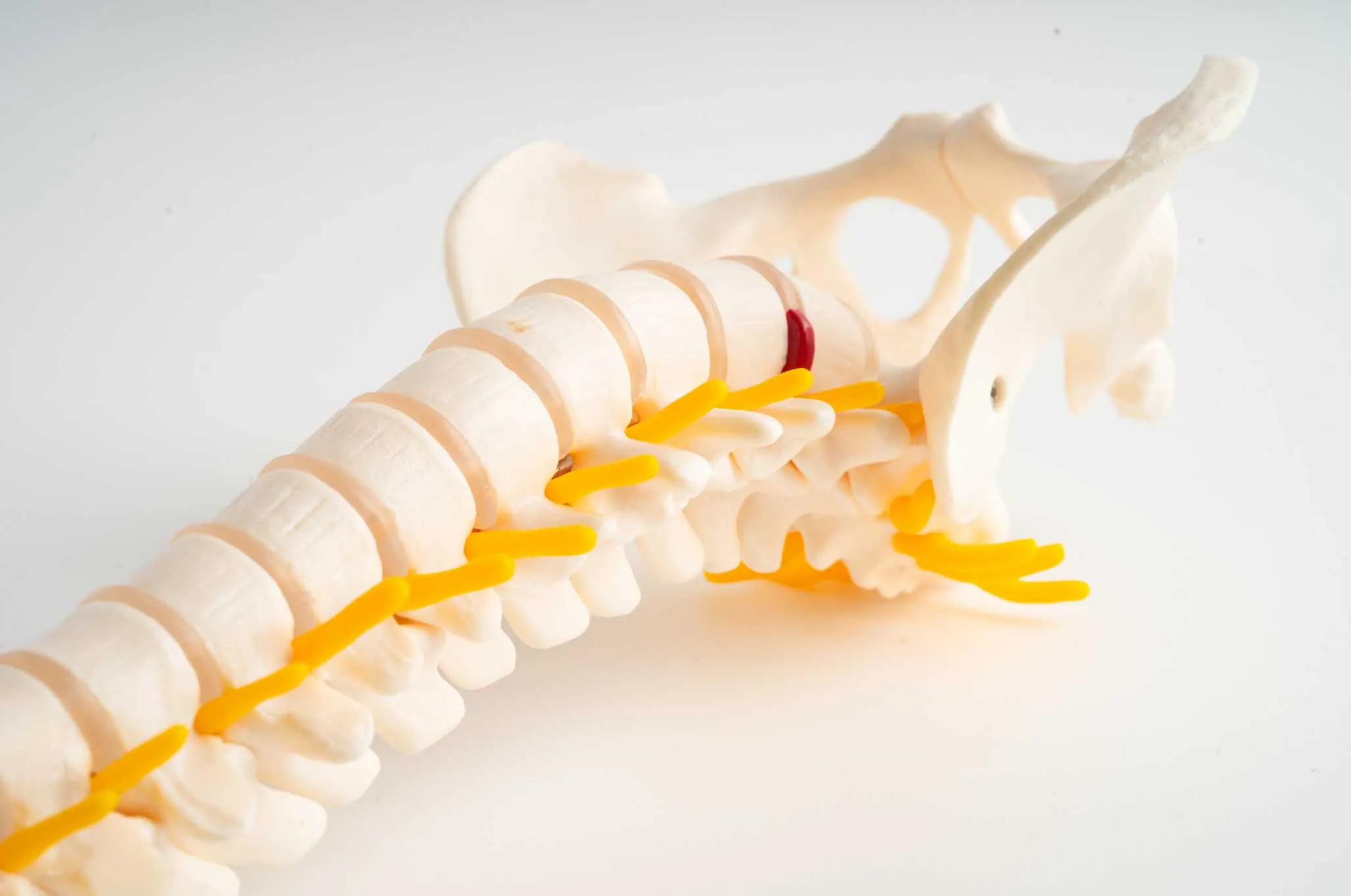
Herniated & Bulging Disc Treatment in Spring, TX
A herniated or bulging spinal disc can cause back pain, neck pain, radiating pain, numbness, tingling, and weakness. Depending on the location and severity of the problem, disc pathology can affect the structures surrounding the spine or irritate and compress nearby spinal nerves.
However, not every disc abnormality causes symptoms, and not every patient with a herniated disc requires surgery. Understanding the type of disc injury, its location, its relationship to the patient’s symptoms, and the findings on examination is essential to determining the appropriate course of care.
At Spring Spine Center in Spring, Texas, we evaluate patients experiencing disc-related neck and back pain, sciatica, radiating arm pain, and other symptoms associated with spinal conditions. Our approach emphasizes clinical examination, appropriate interpretation of imaging findings, and individualized treatment planning.
With training in spinal MRI interpretation through the University at Buffalo Jacobs School of Medicine and a background in spinal biomechanics, Dr. Zachary Ratcliff, D.C., brings additional focus to understanding disc abnormalities and their potential clinical significance.
What Is a Spinal Disc?
The spinal discs are specialized structures located between adjacent vertebrae. They help distribute forces, absorb loading, and allow movement throughout the cervical, thoracic, and lumbar regions of the spine. Each disc consists of two primary components:
- Nucleus pulposus: The inner, gel-like portion of the disc that helps distribute compressive forces.
- Annulus fibrosus: The strong outer layers of fibrocartilage that surround and contain the nucleus.
Disc structure can change as a result of aging, repetitive loading, injury, or other factors. Some changes are part of the normal aging process and never produce symptoms. Other changes can contribute to pain, inflammation, or irritation of nearby spinal nerves.
The distinction matters because a disc abnormality seen on an MRI does not automatically establish the cause of a patient’s symptoms.
Bulging Disc vs. Herniated Disc: What Is the Difference?
The terms bulging disc and herniated disc are often used interchangeably in everyday conversation, but they describe different imaging findings.
What Is a Bulging Disc?
A disc bulge generally describes an extension of disc tissue beyond the normal boundaries of the disc space across a relatively broad portion of its circumference.
Bulging can occur as discs change with age and mechanical loading. A bulge may be asymptomatic, or it may contribute to narrowing around nearby nerves or other structures.
A bulging disc does not necessarily mean that the disc has ruptured or that a nerve is being compressed.
What Is a Herniated Disc?
A disc herniation occurs when disc material extends beyond the normal outer boundary of the disc.
Herniations are further described according to their shape, extent, and relationship to the remaining disc:
- Disc protrusion: A localized herniation in which the base of the displaced material is generally wider than the portion extending beyond the disc margin.
- Disc extrusion: A herniation in which the displaced material extends farther beyond the disc space than its connection to the disc, or the connection is narrower than the displaced portion.
- Sequestered disc fragment: A fragment of herniated disc material that has separated from the main disc.
These terms help describe the anatomy visible on imaging. They do not, by themselves, determine how severe the patient’s symptoms will be or which treatment is appropriate.
What Is a Slipped Disc?
“Slipped disc” is a common informal term for a disc problem, usually a bulging or herniated disc. The disc does not literally slide out of place in the way the phrase might suggest.
When evaluating a suspected slipped disc, the more useful questions are what type of abnormality is present, where it is located, and whether it corresponds with the patient’s clinical findings.
What Is an Annular Tear?
An annular tear, also called an annular fissure, refers to a separation or disruption within the layers of the disc’s outer annulus.
Annular fissures can occur in association with disc injury. Depending on the circumstances, they may be present without symptoms or may be relevant to a patient’s clinical presentation.
Determining whether a finding is acute, chronic, or of uncertain duration requires consideration of the patient’s history, prior imaging when available, MRI characteristics, and other clinical evidence.
What Causes a Herniated or Bulging Disc?
Disc abnormalities can develop through several mechanisms.
Age-Related Degeneration
As people age, discs can lose some of their water content and change in structure. These changes can make the disc less resilient and contribute to bulging, fissures, or herniation.
Degenerative findings are common on imaging, including in people who do not experience back or neck pain.
Repetitive Mechanical Loading
The spine experiences forces during lifting, bending, twisting, prolonged positioning, and many everyday activities. Repetitive loading may contribute to disc symptoms, particularly when combined with other factors.
No single movement or posture is responsible for every disc problem.
Lifting or Sudden Movement
A lifting episode, awkward movement, or sudden increase in spinal loading can trigger symptoms. In some cases, an event may contribute to a disc injury; in others, it may make a previously existing abnormality symptomatic.
Motor-Vehicle Collisions and Other Injuries
A motor-vehicle collision, fall, sports injury, or other traumatic event can expose the spine to substantial forces. Some patients subsequently develop neck or back pain, radiating symptoms, or findings that warrant evaluation for disc injury.
Determining whether a particular disc abnormality resulted from a specific event requires a careful assessment of the mechanism of injury, symptom onset, examination findings, imaging, and any relevant pre-injury information.
Can a Herniated Disc Cause Sciatica or Radiating Arm Pain?
Yes. A disc herniation can irritate or compress a nearby spinal nerve root, producing symptoms that travel away from the spine.
The location of the affected disc helps determine where symptoms may occur.
Lumbar Disc Herniation
A herniated disc in the lower back can irritate a lumbar or sacral nerve root and produce symptoms such as:
- Pain traveling from the lower back or buttock into the leg
- Sharp, shooting, burning, or electric-like leg pain
- Numbness or tingling in part of the leg or foot
- Weakness involving certain leg or foot movements
- Symptoms that worsen with certain positions or activities
When symptoms follow the distribution of the sciatic nerve because of irritation of contributing nerve roots, they are commonly described as sciatica.
Cervical Disc Herniation
A herniated disc in the neck can affect a cervical nerve root, producing a condition commonly called cervical radiculopathy.
Possible symptoms include:
- Neck pain
- Pain traveling into the shoulder, arm, or hand
- Tingling or numbness in the arm or fingers
- Weakness in particular arm or hand movements
- Changes in reflexes or sensation
The pattern of symptoms can help identify which nerve root may be involved, although individual presentations vary.
When a Disc Problem Does Not Cause Nerve Symptoms
Some patients have localized neck or back pain without radiating pain, numbness, tingling, or weakness. Others have disc abnormalities on MRI but no symptoms attributable to the finding. A disc can be abnormal without compressing a nerve. Conversely, nerve irritation can sometimes occur without dramatic compression visible on imaging. This is why diagnosis should not be based on the MRI report alone.
How Is a Herniated Disc Diagnosed?
An appropriate evaluation combines the patient’s history, physical examination, and imaging when indicated.
1. Clinical History
The history helps establish when symptoms began, how they have changed, whether an injury occurred, and what activities or positions influence them.
Relevant information includes:
- Location and distribution of pain
- Presence of numbness, tingling, or weakness
- Changes in walking, lifting, sitting, or other activities
- Whether symptoms began after a collision or other injury
- Previous episodes and treatment
- Relevant medical history and prior imaging
2. Orthopedic and Neurological Examination
The examination may include assessment of spinal movement, strength, sensation, reflexes, gait, and other findings relevant to the suspected condition.
Specific orthopedic and neurological tests may help determine whether symptoms are consistent with nerve-root irritation or another musculoskeletal problem.
The examination also helps identify findings that warrant additional medical assessment.
3. MRI and Other Imaging
MRI can provide detailed information about disc structure, disc herniations, spinal canal dimensions, neural foramina, and surrounding soft tissues.
When appropriate, MRI may help identify:
- The spinal level involved
- The type and location of a disc herniation
- Potential nerve-root contact, displacement, or compression
- Central canal or foraminal narrowing
- Other abnormalities that could help explain symptoms
Not every patient with back or neck pain needs an MRI. Imaging decisions depend on the clinical presentation, duration and progression of symptoms, suspected underlying condition, and whether the results are likely to affect management.
Why MRI Findings Must Be Compared With Symptoms
An MRI is an important diagnostic tool, but it is not a diagnosis in isolation.
For example, an MRI might show a disc protrusion at a particular lumbar level. The next step is to determine whether the location and side of that finding are consistent with the patient’s symptoms and examination.
A finding that does not match the clinical presentation may be incidental rather than the primary source of the patient’s problem.
Similarly, the size of a herniation alone does not reliably determine the amount of pain a person experiences. The location of the herniation, surrounding anatomy, inflammatory response, degree of nerve involvement, and individual factors all matter.
At Spring Spine Center, we place emphasis on correlating imaging findings with the clinical picture rather than assuming that every abnormality identified on MRI is responsible for the patient’s symptoms.
Can a Herniated Disc Heal on Its Own?
Many patients with symptomatic disc herniations improve over time without surgery. In some cases, the herniated material gradually decreases in size through a process called spontaneous resorption.
The extent and timing of improvement vary. Some herniations regress substantially, while others remain visible on follow-up imaging. Symptoms can also improve even when an imaging abnormality persists.
Recovery depends on factors such as the type and location of the herniation, degree of nerve involvement, symptom severity, overall health, and response to care.
Improvement in pain does not necessarily mean that the disc has returned to its original structure. Likewise, a persistent MRI finding does not automatically mean that ongoing treatment or surgery is necessary.
Worsening neurological symptoms or significant weakness require prompt reassessment rather than simply waiting for spontaneous improvement.
Can Chiropractic Care Help a Herniated or Bulging Disc?
Chiropractic care has helped many patients with disc-related neck and back symptoms. For most patients, conservative care can be part of a treatment plan intended to improve mobility, manage symptoms, and support a return to normal activities.
However, treatment must be selected according to the patient’s presentation. A disc bulge without neurological involvement is different from a large herniation accompanied by progressive weakness or significant spinal canal compromise.
At Spring Spine Center, the initial priority is to evaluate the patient’s symptoms and determine whether chiropractic and other conservative approaches are appropriate.
Depending on the clinical findings, a treatment plan may include:
- Appropriate chiropractic techniques
- Non-surgical spinal decompression for selected patients
- Corrective exercise and rehabilitation
- Physiotherapy and other supportive conservative therapies
- Activity modification and movement recommendations
- Referral or co-management when another type of medical evaluation or treatment is indicated
Not every disc condition should be treated with the same technique. The approach should reflect the location and severity of the problem, neurological findings, medical history, and response to care.
Is Spinal Decompression Appropriate for a Herniated Disc?
Non-surgical spinal decompression is a form of mechanical traction intended to apply controlled forces to the spine. It is often used as part of a conservative treatment program for selected patients with disc-related symptoms.
Whether decompression is appropriate depends on the patient’s symptoms, examination findings, suspected pain generator, medical history, and contraindications.
At Spring Spine Center, decompression may be considered as one component of an individualized plan when clinically appropriate. It is not a substitute for urgent medical evaluation when significant neurological compromise is suspected.
What Other Conservative Treatments May Help?
Depending on the diagnosis, conservative care may include several complementary approaches.
Corrective Exercise and Rehabilitation
Appropriately selected exercises can help improve strength, mobility, movement tolerance, and functional capacity. Exercise selection should reflect the patient’s symptoms and capabilities rather than follow a single protocol for every disc problem.
Activity Modification
Temporary modification of aggravating activities may help manage symptoms while maintaining appropriate movement. Prolonged bed rest is generally not the goal; recommendations should be tailored to the individual.
Chiropractic and Manual Therapies
Selected manual approaches may help address associated musculoskeletal pain and movement restrictions. Techniques must be appropriate for the patient’s condition, and forceful treatment should not be applied indiscriminately to every disc herniation.
Medical Co-Management
Some patients benefit from evaluation by a physician or specialist, particularly when symptoms are severe, persistent, progressive, or associated with significant neurological findings.
Conservative care should not delay appropriate medical or surgical assessment when indicated.
When Does a Herniated Disc Require Medical or Surgical Evaluation?
Many disc conditions can initially be managed without surgery. However, medical or specialist evaluation may be necessary when symptoms are severe, persistent despite appropriate care, or associated with neurological deficits.
Prompt medical assessment is especially important for new or worsening muscle weakness or other significant neurological changes.
Seek emergency medical attention for symptoms such as:
- New loss of bladder or bowel control
- Difficulty starting urination or inability to urinate
- Numbness in the groin, inner thighs, or saddle region
- Rapidly progressing or significant weakness
- Severe neurological symptoms following an injury
These symptoms can indicate serious nerve compression or another urgent condition.
Surgical consultation may be appropriate in selected cases, such as significant neurological compromise or persistent disabling symptoms when non-surgical treatment has not provided adequate relief. The decision depends on the diagnosis, clinical findings, imaging, risks, and expected benefits.
Herniated Disc Treatment in Spring, TX
Spring Spine Center provides chiropractic and conservative spine care for patients in Spring, Klein, Tomball, The Woodlands, and surrounding North Houston communities.
Our approach emphasizes the relationship between a patient’s symptoms, examination findings, and imaging results. Rather than assuming every disc abnormality requires the same treatment, we evaluate the clinical presentation and determine whether conservative care is appropriate.
Depending on the patient’s needs, care may include:
- Evaluation of neck and lower-back pain
- Assessment of symptoms consistent with sciatica or cervical radiculopathy
- Review and clinical correlation of available MRI findings
- Chiropractic care
- Non-surgical spinal decompression for selected patients
- Corrective exercise and physiotherapy
- Conservative care following auto-accident injuries
- Referral or co-management when indicated
Spring Spine Center
6535 FM 2920, Suite 200
Spring, TX 77379
Phone: 281-376-1288
Frequently Asked Questions About Herniated and Bulging Discs
What is the difference between a bulging disc and a herniated disc?
A bulging disc extends beyond the normal disc boundary across a relatively broad portion of its circumference. A herniated disc involves a more localized displacement of disc material. Both findings can occur with or without symptoms.
Is a herniated disc the same as a slipped disc?
“Slipped disc” is an informal term commonly used to describe a bulging or herniated disc. It does not mean the disc has literally slipped out of position.
Can a bulging disc cause sciatica?
Yes. A bulging disc can contribute to narrowing around a nerve root and cause sciatic symptoms in some cases. However, many bulging discs do not cause symptoms, so the finding must be evaluated in context.
Can a herniated disc cause numbness or weakness?
Yes. If a herniation affects a spinal nerve root, it can produce radiating pain, numbness, tingling, or muscle weakness. New or worsening weakness should be assessed promptly.
Do all herniated discs require surgery?
No. Many patients improve with time and appropriate conservative care. Surgery is considered in selected cases based on symptom severity, neurological findings, imaging, and response to non-surgical treatment.
Can chiropractic care help a herniated disc?
Chiropractic care and other conservative treatments are appropriate options for many patients with disc-related symptoms. The specific treatment depends on the clinical presentation, and some conditions require medical referral rather than chiropractic treatment alone.
Does spinal decompression put a herniated disc back into place?
Spinal decompression applies controlled mechanical traction. It should not be described as a guaranteed method of putting a disc back into place or reversing a herniation. It may be considered as part of a conservative care plan for selected patients.
Does an MRI prove that a disc is causing my pain?
No. MRI findings must be compared with the patient’s symptoms and examination. Some people have disc abnormalities without related symptoms, while others have significant symptoms with less dramatic imaging findings.
Can a disc herniation heal without surgery?
Many patients improve without surgery, and some herniations decrease in size over time. The degree of recovery varies, and persistent or worsening neurological symptoms require appropriate reassessment.
How long does recovery from a herniated disc take?
Recovery varies based on the location and severity of the problem, neurological involvement, overall health, and response to care. Some people improve over several weeks, while others experience symptoms for months or longer.
When should I see a chiropractor for a disc problem?
A chiropractor is appropriate when symptoms appear consistent with a musculoskeletal or spinal condition and there are no indications that urgent medical assessment is needed. An evaluation helps determine whether conservative chiropractic care is suitable or referral is more appropriate.
Schedule a Disc Evaluation in Spring, Texas
If neck pain, lower-back pain, sciatica, or radiating arm symptoms are interfering with your daily activities, an evaluation can help determine whether a disc problem may be contributing to your symptoms.
Contact Spring Spine Center to discuss your symptoms and determine whether chiropractic and conservative spine care may be appropriate for your situation.
Spring Spine Center
6535 FM 2920, Suite 200
Spring, TX 77379
Phone: 281-376-1288
Medical Disclaimer:
This page is intended for general educational purposes and is not a substitute for an individual examination, diagnosis, or medical advice. Disc abnormalities can have different clinical implications, and treatment recommendations should be based on the patient’s symptoms, medical history, examination findings, imaging when appropriate, and other relevant clinical information.


